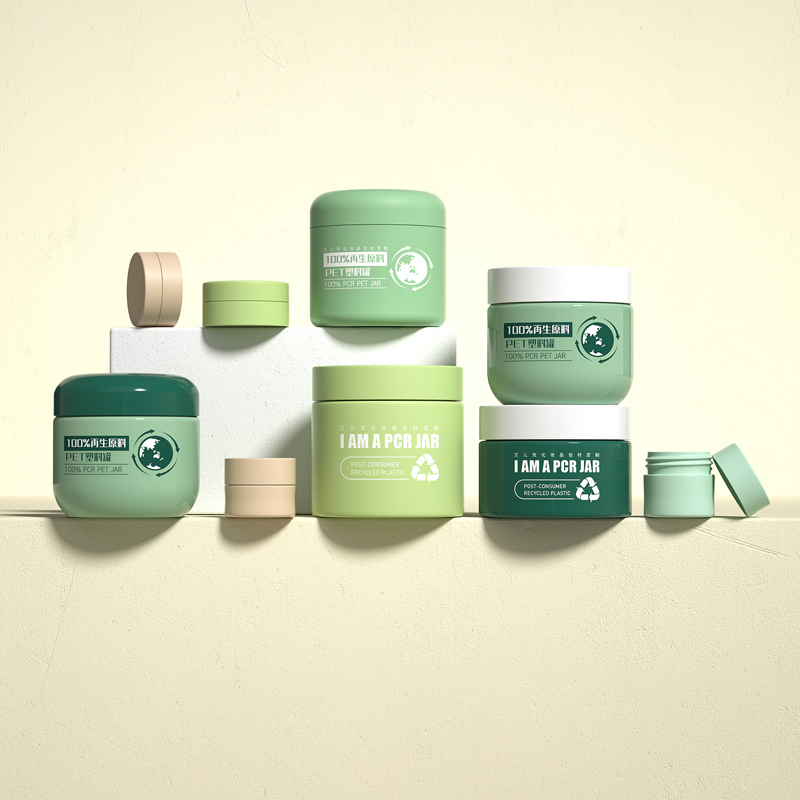
Material Selection: How PET and PP Reduce the Environmental Impact of Plastic Cosmetic Jars at the Source
The environmental impact of plastic cosmetic jars can be mitigated at the source through scientific material selection. Traditional mixed-plastic jars suffer from low recyclability due to difficult separation, whereas mono-material PET and PP benefit from well-established recycling systems.
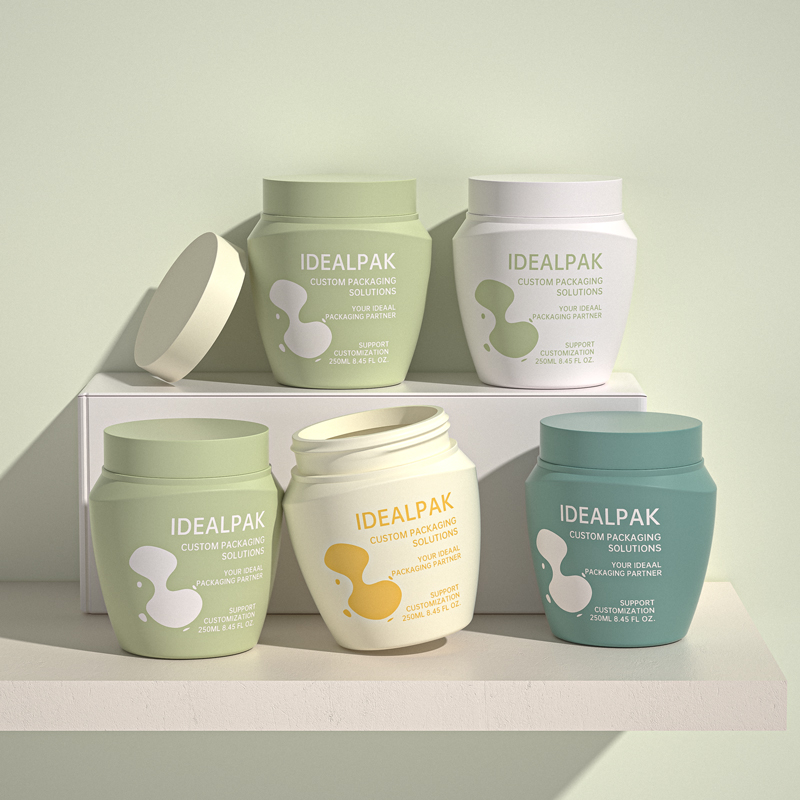
Advantages of PET plastic cosmetic jars:
- High transparency, ideal for showcasing contents
- Lightweight and impact-resistant, low transport carbon footprint
- Resin code #1, with globally mature recycling infrastructure
Advantages of PP plastic cosmetic jars:
- Chemical resistance, suitable for cream formulations
- Heat resistance, microwave-safe for sterilization
- Resin code #2, minimal performance loss after recycling
By prioritizing PET or PP jars, brands can reduce the environmental impact of plastic cosmetic jars by approximately 30-40%, while providing consumers with clear recycling guidance.
Innovative Solutions: Biodegradable Plastics and Refillable Systems
The beauty industry is leveraging technological innovation to fundamentally reduce the environmental impact of plastic cosmetic jars. Two cutting-edge directions deserve attention:
- Biodegradable Plastics
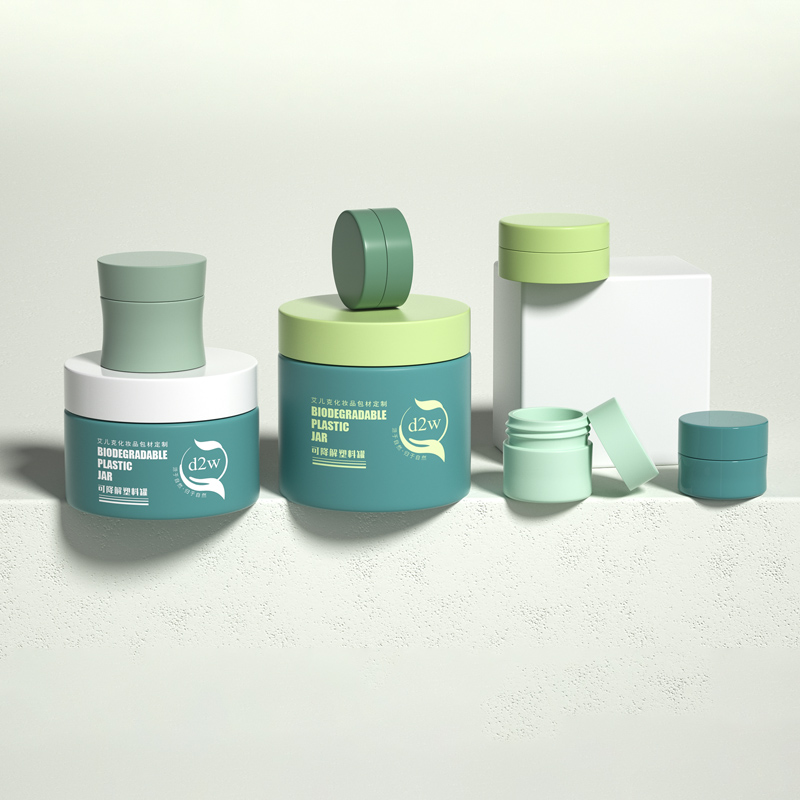
Bioplastics such as PLA (Polylactic Acid) decompose into water and CO2 under industrial composting conditions. Currently suitable mainly for short-shelf-life products (e.g., mask jars). Note: PLA is not compatible with traditional recycling streams and requires dedicated composting facilities. - Refillable Systems
Consumers purchase an outer jar once and then only replace inner refills. This design can reduce the environmental impact of plastic cosmetic jarsby more than 70%, while enhancing brand loyalty.
Additionally, alternative materials such as glass, aluminum, and recycled paper pulp are also reducing reliance on virgin plastics in specific applications.
Consumer Awareness and Brand Responsibility: Co-shaping a Green Beauty Future
Understanding the environmental impact of plastic cosmetic jars is a prerequisite for consumers to make informed choices. Brands can empower consumers by:
- Printing clear recycling instructions on packaging (e.g., “Rinse and Recycle”)
- Committing to use a certain percentage of post-consumer recycled (PCR) resin
- Publishing annual sustainability reports with transparent carbon footprint data
Beyond these actions, brands can also launch educational campaigns on social media, partner with local recycling facilities to improve collection rates, and offer incentives such as loyalty points for returning empty jars. When consumers see tangible rewards and clear impact metrics, they become more engaged in the circular economy.
When consumers choose to support sustainable brands, they are effectively voting for a lower-impact future. Every responsible disposal action contributes to reducing the environmental impact of plastic cosmetic jars.